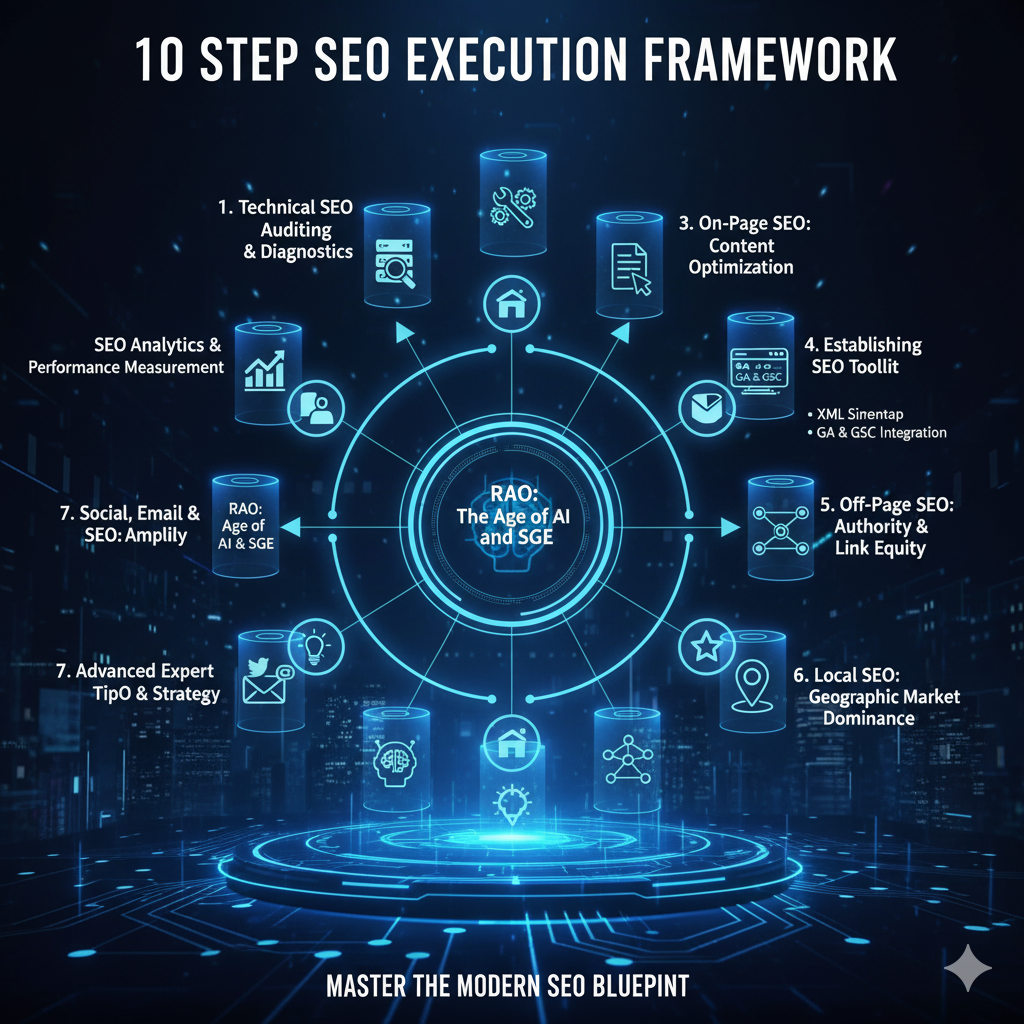
10 Step SEO Execution Framework
Step 1:
Technical SEO Auditing and Diagnostics
1. Site Health Monitoring Tools: Technical Audit
2. Log Files Analysis: Unlocking Crawler Behaviour
Step 2:
Technical SEO:
The Engine Under the Hood
3. Website Structure and Architecture: SEO-Friendliness
4. Crawlability and Navigation
5. Creating Robots.txt
6. XML Sitemap Creation
7. SEO-friendly URL Structure
8. Canonicalization and URL Redirects
9. Pagination & Faceted Navigation SEO
10. Breadcrumbs
11. Core Web Vitals
12. Site Speed Optimization
13. Mobile-first Indexing
14. AMP and Mobile Enhancements: Optimizing for the On-the-Go User
15. Website Security and HTTPS
16. Structured Data and Schema Markup
17. User Responsive UI
18. SEO Friendly User Interface and UX Enhancement
19. Create Sitemap Data using Database
20. Site Migrations and SEO
Step 3
On-Page SEO:
Optimizing Content for Search and Users
21. Keyword Research Redefined: From Keywords to Topics and Entities
22. Navigational, Informational, Transactional Queries: Understanding user's intent
23. Keyword Discovery: Tools and Techniques
24. Mastering Keyword Intent and Relevance
25. LSI, Semantic Keywords, and Contextual Optimization
26. Building a Content Calendar
27. Topic Clusters, Content Gaps, and Site Architecture Alignment
28. Competitive Content Analysis
29. Crafting Compelling, User-focused Content
30. Content Freshness and Updating Strategies
31. Content formats: Blogs, videos, podcasts, and case studies
32. The Art of Content Promotion
33. Content Optimization Strategies
34. Headlines, Subheadings, and Readability
35. Optimizing Titles, Meta Descriptions, and Header Tags
36. Optimizing Meta Tags
37. Image optimization and alt text
38. Internal and External Linking
39. International and Multilingual SEO
40. Geo Tagging and Location-specific Optimization
41. Featured Snippet Optimization
42. Voice Search Optimization
43. SEO for Ecommerce & Large Sites using AI
44. Importance of Regular Updates
Step 4:
Establishing SEO Toolkit
Integrating Google Analytics and Search Console
45. Connecting XML Sitemap to Google Search Console
46. Connecting Google Analytics and Google Search Console
Step 5:
Off-Page SEO:
Building Authority, Trust, and Link Equity
47. E-A-T and Brand Authority
48. Backlinks and their Value
49. Which links move the needle? Difference between Good and Bad Links
50. Anchor Text Strategy for Link Building
51. Competitor Backlink Gap Analysis
52. Link Building Tools and Platforms
53. Link Building Strategies: The Heart of off-page SEO
54. Strategies for Acquiring High-Quality Backlinks
55. Influencer Outreach
56. Digital PR, Content Marketing, Commenting, and Relationship Building
57. Brand Mentions and Online Reputation Management
58. SEO for Multimedia Content
59. Off-Page SEO Tools and Resources
Step 6:
Local SEO:
Dominating your Geographic Market
60. Mastering Local Search
61. Optimizing Google Business Profile
62. Local Citations and Local SEO
63. Leveraging Local Reviews, Ratings, and Testimonials
64. Location-specific Landing Pages
65. Image Optimization for Local Businesses
66. Video Optimization for Local Businesses
67. Voice Search for Local SEO
Step 7:
Social Media, Email, and SEO
Amplifying SEO through Digital Channels
68. Offline Events into Online Content for SEO
69. Content Repurposing for SEO and Social Media
70. User-Generated Content (UGC): Impact on SEO
71. Impact of Social Media on SEO
72. Leveraging LinkedIn for SEO
73. Social Listening: SEO Insights
Step 8:
Advanced Expert Tips and Strategic Framework
Mastering the Art and Science of SEO
74. Competitor Monitoring and Market Intelligence Tools for SEO
75. SEO Expert Tips: Best Practices from Professionals
76. Building a 6-Month SEO plan
77. Working with Developers and Content Creators
Step 9:
RAO: The Age of AI and SGE
Optimizing for AI-driven Search Era
78. SEO vs RAO: Evolution of SEO: From Keywords to E-E-A-T
79. Search Generative Experience (SGE)
80. Integrating SEO, GEO, and SGE
81. AI Tools for Smarter Optimization
82. Prompt Engineering for SEO
83. Importance of E-E-A-T in AI Driven World
Step 10:
SEO Analytics & Performance Measurement
Measuring, Analyzing, and Proving SEO Value
84. Setting up Conversions and Goals: Demonstrate Business Value of SEO
85. Google Tag Manager and Event Tracking: Tracking Micro-Conversions
86. SEO-Focused Reports in Google Analytics
87. Index Coverage Reports
88. Performance Reports
89. User Experience Report
90. Audience Reports: Demographics, Interests, and Device usage
91. Log Analysis and Crawl Budget Monitoring
92. Funnel and Cohort Analysis for SEO
93. Unlocking Power of Google Analytics (GA4) Data API
94. Google Analytics: How to Grow to Business
95. SEO Dashboards and Analysis Technique
96. Attribution and Proving ROI
97. SEO Monthly Report